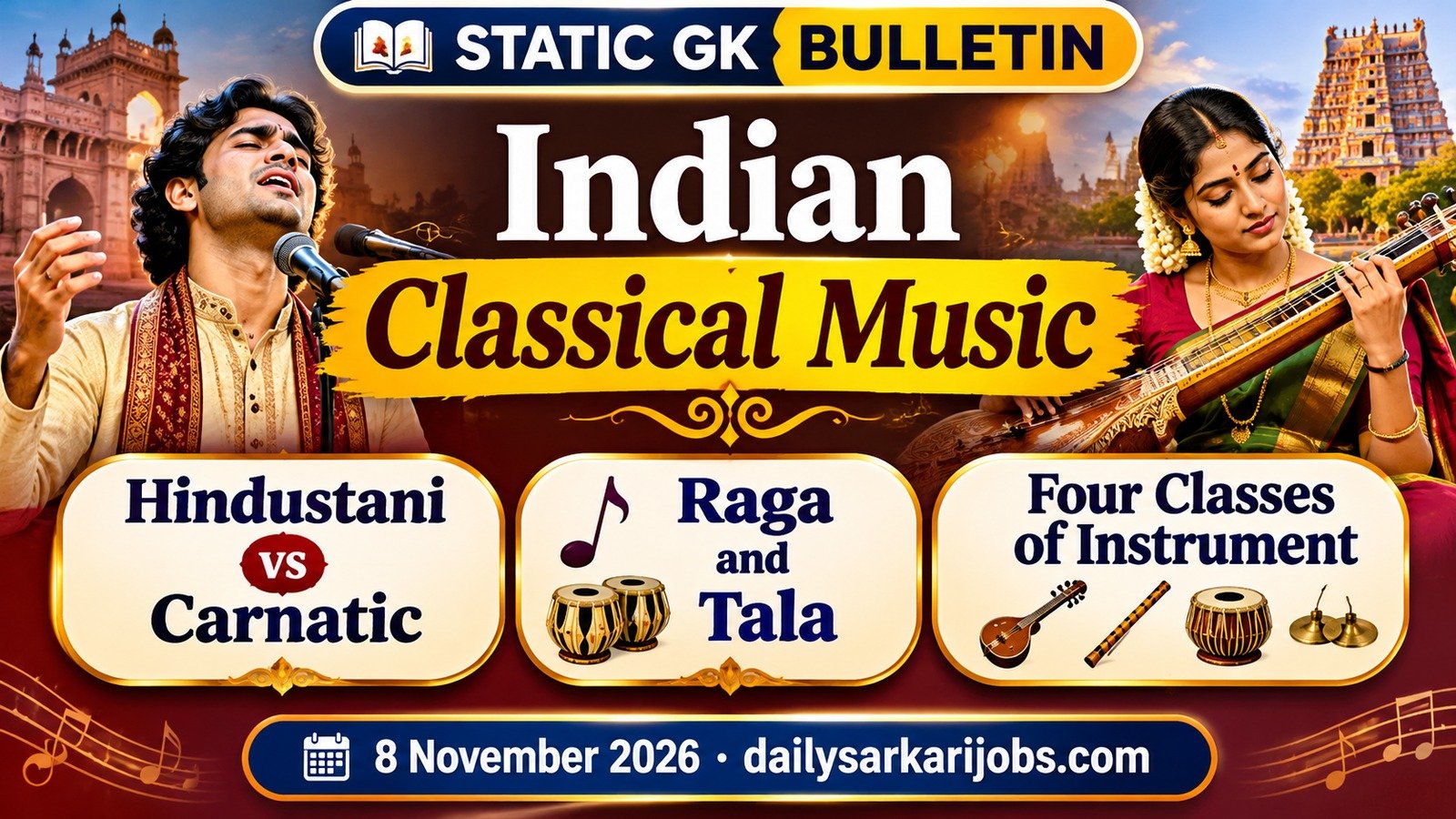
Indian classical music is usually taught as a list of names to memorise.There is one fact about it that makes the whole chapter make sense, and it is a fact about how the music survived at all.
It Lasted Centuries With Almost Nothing Written Down
There is no Indian equivalent of a Beethoven score.For most of its history this music was not written at all. It passed from teacher to student, by ear, one person at a time.
And that is not a failing — it follows from what a raga actually is.A raga is not a tune. It is a set of rules for making tunes: which notes you may use going up, which coming down, which notes to rest on, which phrases belong and which do not. Two performances of the same raga can share almost no notes and both be correct.You cannot write down a thing like that. You can only pass it on.
Everything else follows from this.It is why the lineage — the gharana in the north — matters so much, because the lineage IS the music. It is why performances are long, because the raga has to be unfolded rather than played. And it is why a guru’s name is part of a musician’s identity in a way a conservatory’s name never is in the West.
Jargon, Defined Once
Raga is the melodic framework — the rules for which notes may be used and how they must behave.
Tala is the rhythmic cycle — a fixed number of beats that repeats, the way a bar repeats in Western music but much longer.
Gharana means, literally, a household. In music it is a lineage or school with its own style, named after the place it came from.
A kriti is the main composed form in Carnatic music; khayal is the dominant form in Hindustani vocal music.
Sapta swara are the seven notes — Sa, Re, Ga, Ma, Pa, Dha, Ni, the Indian equivalent of do-re-mi, and the same seven in both systems.
Traced through composers and lineages rather than gharanas
They were one tradition until roughly the thirteenth and fourteenth centuries, when the music of the north absorbed Persian and Central Asian influence through the courts and the southern tradition did not. The split is cultural contact, not disagreement.The Sangeet Ratnakara of Sharngadeva, from the thirteenth century, is the last great text both systems still claim.
The Carnatic Trinity
Tyagaraja, Muthuswami Dikshitar and Syama Sastri are together called the Trinity of Carnatic music.
Dikshitar composed largely in Sanskrit, with an estimated 450 to 500 works to his name, many of them addressed to particular temples and deities.
His 250th birth anniversary is being marked now — a ₹250 commemorative coin was released by the Finance Minister at Banaras Hindu University on 3 November 2026, a city where he spent a long period and composed.
If you remember only one group of names from Carnatic music, make it these three.
The Four Classes of Instrument
Indian texts classify instruments by how the sound is actually produced, which is a more useful scheme than the Western strings-winds-percussion, because it tells you the physics.
Class
Sound comes from
Examples
Tata
A vibrating string
Veena, sitar, sarod, violin
Sushira
Air in a hollow
Flute, shehnai, nadaswaram
Avanaddha
A stretched membrane
Tabla, mridangam, pakhawaj, dholak
Ghana
The solid body itself, with no membrane or string
Manjira, jaltarang, ghatam
The one that catches people is Ghana.A ghatam is a clay pot and a jaltarang is a row of water-filled bowls. Nothing is stretched over them and nothing is strung across them — the object rings on its own.
Exam Alert: Four Traps
Tabla goes with Hindustani, mridangam with Carnatic.Both are Avanaddha; they belong to different systems.
Khayal is Hindustani, kriti is Carnatic.Dhrupad is the older Hindustani form that khayal largely displaced.
Tata is strings, Ghana is solid.A question that lists the ghatam under Avanaddha is testing exactly this.
Raga is melody, tala is rhythm.Straightforward, and still the most common slip on the topic.
Did You Know: The Seven Notes Are Named After Animals
The seven Indian notes are abbreviations of longer words — Shadja, Rishabha, Gandhara, Madhyama, Panchama, Dhaivata, Nishada, shortened to Sa Re Ga Ma Pa Dha Ni. Several of the full names are traditionally linked to the sounds of animals and birds: the peacock, the bull, the goat, the horse, the cuckoo, the elephant.
Whether the names really came from those sounds is a tradition rather than a settled fact — but it tells you something true about the system all the same. The scale was understood as something found in the world and recognised, not as something invented and imposed.
Why a Reader Should Care
Art and culture is a short section where questions repeat almost word for word, and music, dance and instruments supply most of them. It pairs with our capsule on classical dances and festivals — that one covers the eight classical dance forms, which share ragas and talas with this material — and with the National Akademis, since the Sangeet Natak Akademi is the body that recognises musicians at the national level.
Today’s Current Affairs explainer is on three Indian manuscripts entering UNESCO’s Memory of the World register, and the two sit together deliberately. Those manuscripts survived because somebody wrote them down and the birch bark held. This music survived with almost nothing written down at all. Both are answers to the same question — how do you carry something across centuries? — and they are opposite answers. Our capsule on UNESCO World Heritage Sites covers the third kind of heritage, the places.
Practice Questions
Q1. In Indian classical music, a raga is (a) A fixed composition to be played note for note (b) A melodic framework setting which notes may be used and how (c) A rhythmic cycle of fixed beats (d) A school or lineage of musicians Answer: (b) A melodic framework setting which notes may be used and how The rhythmic cycle is the tala, and a lineage in the north is called a gharana.
Q2. Which instrument belongs to the Ghana class? (a) Mridangam (b) Shehnai (c) Ghatam (d) Sarod Answer: (c) Ghatam Ghana instruments are solid bodies that ring on their own, with no stretched membrane and no string.
Q3. The Trinity of Carnatic music consists of Tyagaraja, Syama Sastri and (a) Sharngadeva (b) Amir Khusrau (c) Swathi Thirunal (d) Muthuswami Dikshitar Answer: (d) Muthuswami Dikshitar A ₹250 commemorative coin marking his 250th birth anniversary was released at Banaras Hindu University in November 2026.
Q4. Khayal and dhrupad are vocal forms belonging to (a) Carnatic music (b) Hindustani music (c) Both systems equally (d) Neither system Answer: (b) Hindustani music The corresponding principal form in the southern system is the kriti, and the older of the two northern forms is dhrupad.
Q5. Instruments such as the tabla, mridangam and pakhawaj are classified as (a) Tata (b) Sushira (c) Avanaddha (d) Ghana Answer: (c) Avanaddha Each of them makes its sound from a stretched membrane, which is what that class means.
30-Second Revision
The hinge:it survived with almost nothing written down.A raga is a set of rules for making tunes, not a tune — so it had to be passed on person to person, which is why the lineage matters.
Two systems:Hindustani in the north (khayal, dhrupad; sitar, tabla; gharanas) and Carnatic in the south (kriti; veena, mridangam). One tradition until roughly the 13th–14th century.
Raga is melody, tala is rhythm; the seven notes are Sa Re Ga Ma Pa Dha Ni.
The Carnatic Trinity:Tyagaraja, Muthuswami Dikshitar, Syama Sastri.
Four instrument classes:Tata string, Sushira air, Avanaddha membrane, Ghana solid.
What Is Not Settled
One widely repeated claim that is not established.Amir Khusrau is often credited with inventing the sitar and the tabla, and this appears as fact in a great many guidebooks. Historians of music do not accept it: the attribution is traditional, the evidence is thin, and both instruments appear in recognisable form considerably later.
Answer it the way your own syllabus material teaches it, because some papers still treat the attribution as settled. But know that it is a tradition rather than a documented fact — and that the honest answer to who invented the tabla is that nobody knows.
Sources
NCERT and standard Indian art and culture material — the division into Hindustani and Carnatic systems and the period of their divergence, raga and tala, the principal vocal forms of each system, the gharanas of the north, the Carnatic Trinity, the seven notes and their full names, and the fourfold classification of instruments into Tata, Sushira, Avanaddha and Ghana.
Reporting of the release of the ₹250 commemorative coin marking the 250th birth anniversary of Muthuswami Dikshitar, released by the Finance Minister at Banaras Hindu University on 3 November 2026, together with the estimate of 450 to 500 compositions and his association with the city.
The attribution of the sitar and tabla to Amir Khusrau is noted above as a tradition rather than an established fact, because that is how the historical scholarship treats it.